Thinking about insulating your basement here in Philadelphia? Good. It's one of the smartest upgrades you can make, especially with our winters that can swing from mild to brutal in a blink. But let's be real, you're not just looking for comfort; you want to know what it's gonna cost. I get it. I've been doing this for years, and I've seen all sorts of basements, from the old stone foundations in South Philly to the newer poured concrete in the Northeast. So, let's talk numbers.
What Drives Basement Insulation Costs?
It's never a one-size-fits-all price, and anyone who tells you otherwise is probably selling something you don't need. A few key things really push the price up or down:
- The Type of Insulation: This is probably the biggest factor. Are we talking about basic fiberglass batts, rigid foam boards, or spray foam? Each has its own material cost and installation complexity. Spray foam, for instance, is usually more expensive upfront than batts, but it offers superior air sealing and R-value.
- Basement Size and Layout: A small, open basement is obviously cheaper to insulate than a sprawling, multi-room setup with lots of nooks, crannies, and obstacles like pipes or ductwork. More square footage and more corners mean more material and more labor.
- Condition of the Basement: Is it clean, dry, and ready to go? Or do we need to deal with moisture issues, mold remediation, or old, failing insulation removal first? These prep steps add to the overall cost, but they're non-negotiable if you want the insulation to actually work and last.
- Wall Type: Insulating an exposed concrete or block wall is different from insulating a finished basement with studs already in place. The method changes, and so does the price.
- Accessibility: If my crew has to navigate tight stairwells, low ceilings, or move a ton of your stored stuff, that's going to factor into the labor cost.
Typical Cost Ranges in Philadelphia
Alright, let's get specific. When I'm talking to homeowners around here, these are the general ranges I see for a typical 1,000 sq ft basement, assuming standard ceiling heights and no major remediation needed:
- Fiberglass Batts (Unfaced or Faced): This is your budget-friendly option. For walls, you're generally looking at $1.00 - $2.50 per square foot of insulated wall area. If you're insulating the ceiling (say, for soundproofing or insulating a crawl space above), it's similar. So, for a 1,000 sq ft basement with, say, 800 sq ft of wall space to insulate, you might be looking at $800 - $2,000 for materials and installation. It's cheaper, but it doesn't air seal, and it's prone to moisture issues if your basement isn't bone dry.
- Rigid Foam Boards (XPS, EPS, Polyiso): A step up. These are great for moisture resistance and provide a good thermal break. Costs typically run from $3.00 - $7.00 per square foot for materials and installation. For that same 800 sq ft of wall, you're in the ballpark of $2,400 - $5,600.
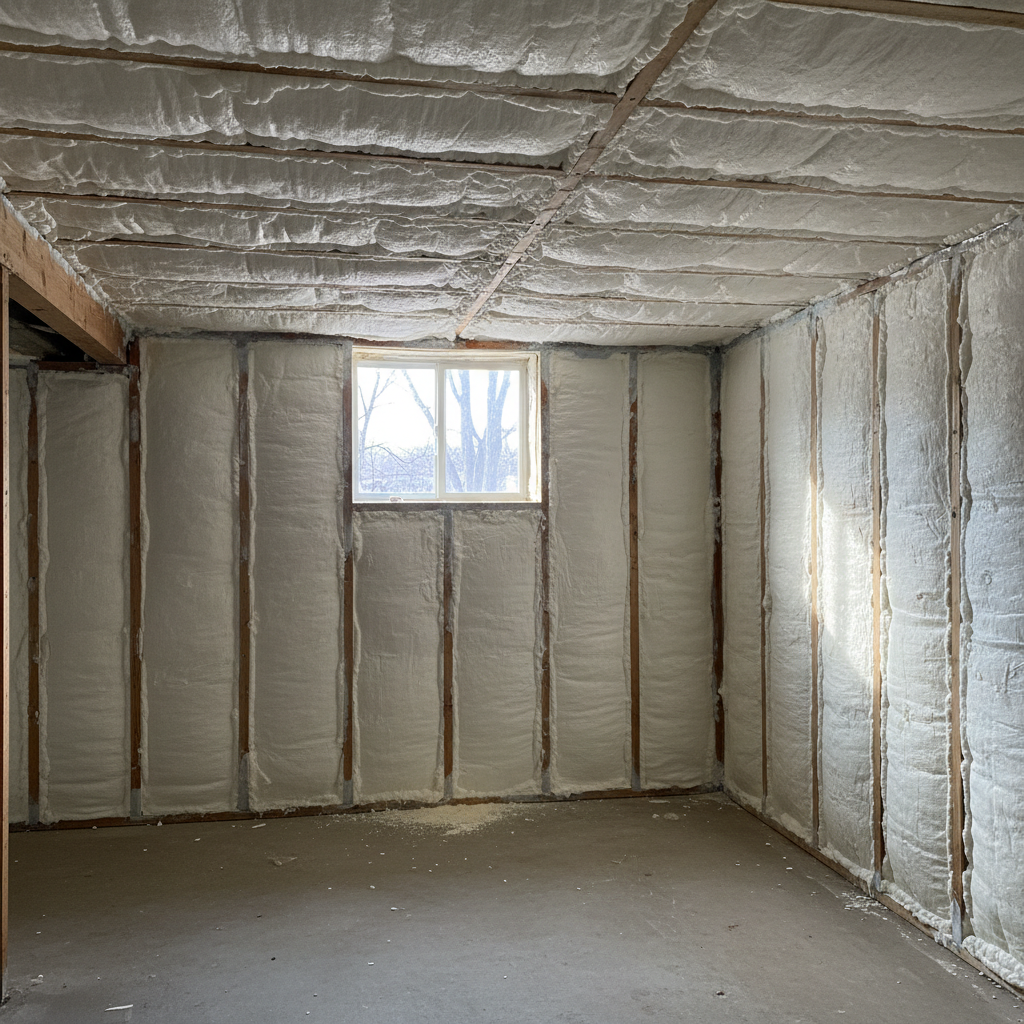
- Closed-Cell Spray Foam: This is the Cadillac of basement insulation, especially for our older Philly homes with their sometimes-damp basements. It air seals, acts as a vapor barrier, and provides a high R-value in a thin layer. You're looking at $5.00 - $9.00 per square foot of wall area. So, for 800 sq ft, that's roughly $4,000 - $7,200. Yes, it's more, but the energy savings and comfort are significant, and it's incredibly durable. We do a lot of this at Spray Foam Pros of Philadelphia because it just works so well for basements.
Remember, these are ballpark figures. Your actual cost will depend on the specifics of your project.
What Should a Good Quote Include?
When you get a quote, don't just look at the bottom line. A good, transparent quote from a reputable contractor should detail:
- Material Type and R-value: Exactly what insulation product they're using and its thermal resistance.
- Total Square Footage: The area they're insulating, whether it's walls, rim joists, or ceilings.
- Prep Work: Any necessary cleaning, sealing cracks, or moisture mitigation.
- Installation Method: How they'll apply or install the insulation.
- Labor Costs: Clearly broken out.
- Cleanup and Disposal: What happens to the old insulation or project waste.
- Warranty Information: On both materials and labor.
- Permits: If a permit is required (sometimes for spray foam, depending on your township), who's responsible for pulling it.
How to Avoid Overpaying for Basement Insulation
Nobody wants to get ripped off, especially not on a home improvement project. Here's how to make sure you're getting a fair deal:
- Get Multiple Quotes: This is Insulation 101. Don't just go with the first guy. Get at least three detailed quotes so you can compare apples to apples.
- Understand the Scope: Make sure each quote is for the exact same scope of work. If one quote is significantly lower, it might be missing something important.
- Ask About Experience: Especially with spray foam, experience matters. You don't want someone learning on your dime. Ask how long they've been doing basement insulation specifically.
- Check References and Reviews: See what other homeowners in Philly are saying about them. Google, Yelp, and even local community groups are good places to look.
- Don't Rush: A good contractor won't pressure you. If someone's pushing for an immediate decision, that's a red flag.
- Address Moisture First: I can't stress this enough. If your basement has active water leaks or chronic dampness, insulate it all you want, it's not going to solve the problem. You'll end up with moldy insulation and wasted money. Fix the water issues first – proper drainage, sealing cracks, maybe even a sump pump. Then, insulate.
Insulating your basement is a solid investment for your Philly home. It'll make your living space more comfortable, cut down on drafts, and save you money on your energy bills. Just do your homework, understand what you're paying for, and you'll be set.